Impact creation
Threats to the forest
Deforestation drivers
The primary causes of deforestation and forest degradation in the Cajambre REDD+ Project area include illegal logging, unsustainable extraction of timber and non-timber resources, and land conversion for subsistence agriculture. These pressures are often intensified by external actors operating without community consent or oversight. Selective logging within and around community territories contributes to forest fragmentation and biodiversity loss. The primary direct agents are illegal loggers, external resource extractors, and subsistence farmers (both outsiders and pressured community members under economic or social pressure).
Indirect drivers play a significant role in enabling these threats. These include limited state presence, weak enforcement of environmental laws, and inadequate resources for territorial control. While land tenure is legally secure under Law 70, the enforcement of collective rights remains a challenge, especially in remote areas with limited institutional support.
Poverty and lack of economic alternatives also contribute to forest degradation, as some community members may resort to short-term extractive practices in the absence of viable livelihoods. Additionally, weak access to markets and infrastructure limits the potential for sustainable economic development.
The REDD+ project addresses these drivers by supporting community-based forest monitoring, strengthening governance, promoting sustainable land use, and investing in alternative income-generating activities such as agroforestry and non-timber forest product value chains. These strategies aim to reduce pressures on forests while reinforcing local ownership and stewardship.
Forest cover then and now
The left image shows forest cover before the project started. The right shows forest cover today.
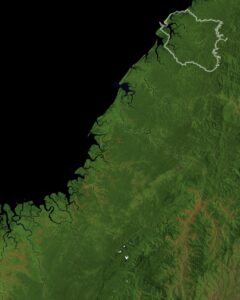
Deforestation data source Hansen/UMD/Google/USGS/NASA. Satellite data processed by Space Intelligence, https://space-intelligence.com
Baseline scenario
Baseline land use
Historically, land use in the Cajambre region has been shaped by subsistence activities such as small-scale agriculture, traditional fishing, and selective timber harvesting by Afro-Colombian communities. These practices were generally low-impact and aligned with customary norms of land stewardship. However, from the early 2000s, external pressures intensified, including illegal logging, unsanctioned mining, and growing interest in infrastructure development in the broader Pacific region.
Currently, the primary land uses remain subsistence-based, but they are increasingly affected by unsustainable extraction by external actors. Forest degradation is most pronounced near riverbanks, access routes, and areas adjacent to non-community lands. Mining operations, although not officially permitted, have occurred sporadically and contribute to localized deforestation and water contamination.
Baseline assessments using remote sensing data showed a historical deforestation rate of approximately 0.84% per year in the absence of project activities (based on the project’s reference region). The main drivers of this forest loss include illegal timber extraction, slash-and-burn agriculture, and limited governance capacity to enforce land-use norms.
The REDD+ project intervenes by supporting sustainable land-use planning, reinforcing internal governance protocols, and implementing forest monitoring systems to reduce degradation and promote forest conservation across the territory.
Baseline socio-economic community conditions
Local communities in the Cajambre REDD+ Project area rely heavily on forest and river resources for their livelihoods. Fishing, subsistence agriculture, and the harvest of non-timber forest products (e.g. medicinal plants, fruits like açaí, and materials for housing) are central to household economies. Timber extraction has also been part of local use, although often overshadowed by external illegal actors.
Poverty levels are high, with limited access to formal employment opportunities. Most income-generating activities are informal and highly dependent on natural resource availability. Market access is constrained by poor infrastructure and the remote location of many communities.
Access to education and healthcare is limited. Schools are often under-resourced, and health services are sparse, requiring travel to urban centers such as Buenaventura for more complex care. These limitations reinforce economic vulnerability and reduce opportunities for youth.
The REDD+ project supports community development through carbon revenue investments, prioritizing education, healthcare, food security, and productive initiatives such as agroforestry and community-led açaí production. It also provides training in governance and project management to build local capacity. These efforts aim to reduce dependency on extractive practices while strengthening the social and economic resilience of the communities.
Pre-project law enforcement
Before the implementation of the Cajambre REDD+ Project, forest protection was formally supported by Colombia’s Law 70 of 1993, which grants Afro-Colombian communities collective land rights and autonomy over natural resource management. While this legal framework provided a foundation for territorial governance, its effectiveness in practice was limited due to weak institutional support and enforcement capacity.
Illegal logging was a significant challenge, often carried out by external actors operating without community consent. Community authorities lacked sufficient resources—such as transportation, technical tools, or legal support—to monitor and control these activities. This led to frequent incursions and resource extraction, particularly in areas near river access points and boundaries with untitled lands.
Land tenure itself was not in dispute, as the territory was legally titled to the Consejo Comunitario del Río Cajambre. However, the lack of effective enforcement by environmental authorities, combined with limited coordination between state institutions and community governance bodies, created a vacuum in oversight.
Overall, the legal recognition of community rights existed, but implementation and protection of those rights were weak. The REDD+ project helped fill this gap by supporting participatory monitoring, legal accompaniment, and institutional strengthening to improve compliance and deter illegal activity within the territory.
Biodiversity levels
The baseline biodiversity of the Cajambre REDD+ Project area is exceptionally high, reflecting its location within the Chocó Biogeographic Region – one of the most biodiverse tropical forest zones globally. The ecosystem is classified as humid tropical rainforest, supporting a rich variety of flora and fauna, including numerous endemic and threatened species.
Key critically endangered species include the brown-headed spider monkey (Ateles fusciceps rufiventris) and the black-headed spider monkey (Ateles fusciceps), both essential keystone species due to their role in long-distance seed dispersal, which supports forest regeneration and plant diversity.
Endangered species in the area include the Baird’s tapir (Tapirus bairdii), a large terrestrial mammal critical for seed predation and soil disturbance, and the great green macaw (Ara ambiguus), a forest-dependent parrot affected by habitat loss.
The presence of these and other species, such as the white-lipped peccary (Tayassu pecari, Vulnerable), indicates a relatively intact and functioning ecosystem at baseline, though increasingly threatened by forest degradation.
Baseline assessments conducted during project design documented high levels of biomass, species richness, and ecological connectivity, supporting the project’s conservation value. These indicators are used as reference points for ongoing monitoring of ecosystem health under the REDD+ framework.
Biodiversity threats
Biodiversity in the Cajambre REDD+ Project area faces multiple threats, both direct and indirect. The primary direct threat is habitat destruction from illegal logging, which fragments forest cover and reduces habitat connectivity for key species. This is often driven by external actors entering community lands without consent, particularly along river corridors and boundary zones.
Poaching of wildlife, including primates and large mammals, contributes to population declines of threatened species such as the brown-headed spider monkey and Baird’s tapir. While local subsistence hunting is traditionally regulated within the community, external pressures have increased unsustainable hunting practices.
Indirect pressures include limited state presence and weak enforcement of environmental laws, which allow illegal activities to persist. Poverty and lack of economic alternatives also contribute to forest degradation and overexploitation of resources.
While invasive species have not been identified as a major issue in the baseline assessment, climate change poses a growing threat by altering rainfall patterns and potentially impacting habitat suitability, freshwater systems, and species distributions.
Together, these pressures endanger not only specific species but also the broader ecological integrity of the Chocó rainforest. The REDD+ project addresses these threats through forest conservation, sustainable livelihoods, biodiversity monitoring, and community-based governance.
Funding and financial sustainability
Before the implementation of the Cajambre REDD+ Project, financial resources for conservation and territorial management were extremely limited. The Consejo Comunitario del Río Cajambre relied primarily on irregular external grants, often linked to short-term development or environmental initiatives. These funds were generally project-based, fragmented, and insufficient to sustain long-term conservation or institutional strengthening.
Government support for conservation in collective Afro-Colombian territories was minimal, with little to no direct funding for forest protection, biodiversity monitoring, or community development. Public investment in the region focused mainly on basic infrastructure and was not tailored to support sustainable land-use or environmental governance.
This lack of sustained financing posed significant risks to forest integrity and community well-being, including a dependency on extractive activities for income. The absence of long-term financial planning and secure funding streams made it difficult to maintain consistent territorial control, enforce land use norms, or invest in alternative livelihoods.
The REDD+ mechanism introduced a performance-based financing model that provided long-term, predictable income tied to forest conservation. However, risks remain related to market fluctuations, verification cycles, and the need for ongoing institutional capacity to manage and allocate funds effectively. Diversifying funding sources continues to be a priority for long-term sustainability.
Cajambre theory of change
Summary of TOC
The Cajambre REDD+ Project’s Theory of Change is based on the premise that strengthening community governance, securing land rights, and providing sustainable economic alternatives will lead to long-term forest conservation and improved well-being. By channeling carbon finance to the Consejo Comunitario, the project supports activities such as forest monitoring, land-use planning, education, and productive initiatives like agroforestry and açaí value chains. These interventions aim to reduce deforestation drivers, such as illegal logging and unsustainable resource use, while reinforcing internal decision-making and participation. The project integrates environmental, social, and economic goals, ensuring that benefits are equitably distributed and aligned with community priorities. Over time, these actions are expected to enhance ecosystem integrity, climate mitigation outcomes, and local resilience, creating a sustainable model of territorial management led by Afro-Colombian communities.
Cajambre ToC Infographic
Market financing
Buyers and financial partners invest in community-centered forest protection projects and purchase the carbon credits they generate, fulfilling voluntary commitments to safeguard the climate and life on Earth.
Multi-stakeholder partnerships
Summary
Communities
The collective territory of the Consejo Comunitario del Río Cajambre both owns and operates the Cajambre REDD+ project
Project developers
Colombian NGO Fondo Acción supports the community in administration and financial governance of the project, ensuring financial accountability and the alignment of project disbursements with Planes Operativos Anuales (POAs).
Governments
The Cajambre REDD+ project is rooted in collective land rights granted under Colombia’s Law 70 of 1993, which recognizes Afro-descendant communities as legal owners of their ancestral territories. The Consejo Comunitario del Río Cajambre holds the land title and serves as the formal project proponent, effectively managing land rights through participatory governance structures.
Cajambre is also supported by a strong national enabling environment, including the National REDD+ Strategy (ENREDD+), coordinated by Ministry of Environment and Sustainable Development (MinAmbiente) and IDEAM (Institute of Hydrology, Meteorology and Environmental Studies).
Community impacts
Health and well-being
Improve infrastructure and access to essential services, including education, clean drinking water, electricity, and healthcare.
Economy
Increased household incomes through diversified and sustainable livelihood options that reduce reliance on logging: Develop processing plants and strengthen value chains for cocoa, naidí, chontaduro, and fishing products, including commercialization and distribution networks. Support local fisheries by strengthening associations, purchasing refrigerated boats, and constructing cold storage facilities.
Education
Improved educational infrastructure and access, ensuring more schools are constructed, properly equipped, and operational to meet community needs.
Women’s empowerment
Greater food security and resilience supported by agroforestry and the revival of traditional agricultural practices, particularly empowering women’s roles in food production.
Enhanced community participation and leadership, including greater involvement of women, in decision-making and project activities.
Deliver environmental education modules tailored to highlight conservation importance and address the specific needs of women.
Governance impacts
Forest governance
Carry out land rights mapping and revise land allocation plans to clearly establish family and community boundaries and delineate natural resource use within collective territories. Review and update territorial management plans and community by-laws to align with ethno-development objectives and REDD+ standards. Demarcate reserve and mangrove areas with appropriate signage and social fencing to promote forest recovery, conservation efforts, and climate resilience.
Community benefit-sharing
Community leaders and technical teams collaboratively identify local priorities, which are then formalized through the development and approval of Planes Operativos Anuales (POAs) by the Consejo Comunitario del Río Cajambre, which, through its General Assembly and Board (Junta), oversees planning, implementation, and accountability processes.
Community Site Officers (CSOs), local leaders trained in administration, monitoring, and community facilitation, play a vital role in implementing the project on the ground.
Land rights
Conduct training and capacity-building programs to enable communities to manage resources and implement the REDD+ project independently.
Forest & wildlife outcomes
Partnerships with the Corporación Autónoma Regional del Valle del Cauca and Wildlife Conservation Society support mangrove restoration and marine species monitoring in Punta Bonita, and efforts to advance the declaration of a local conservation area.
Climate outcomes
Greenhouse gas emissions from deforestation and forest degradation are avoided, generating verified emissions reductions (carbon credits).
-
Buyers and financial partners invest in community-centered forest protection projects and purchase the carbon credits they generate, fulfilling voluntary commitments to safeguard the climate and life on Earth.
-
Summary
-
The collective territory of the Consejo Comunitario del Río Cajambre both owns and operates the Cajambre REDD+ project
-
Colombian NGO Fondo Acción supports the community in administration and financial governance of the project, ensuring financial accountability and the alignment of project disbursements with Planes Operativos Anuales (POAs).
-
The Cajambre REDD+ project is rooted in collective land rights granted under Colombia’s Law 70 of 1993, which recognizes Afro-descendant communities as legal owners of their ancestral territories. The Consejo Comunitario del Río Cajambre holds the land title and serves as the formal project proponent, effectively managing land rights through participatory governance structures.
Cajambre is also supported by a strong national enabling environment, including the National REDD+ Strategy (ENREDD+), coordinated by Ministry of Environment and Sustainable Development (MinAmbiente) and IDEAM (Institute of Hydrology, Meteorology and Environmental Studies).
-
-
-
Improve infrastructure and access to essential services, including education, clean drinking water, electricity, and healthcare.
-
Increased household incomes through diversified and sustainable livelihood options that reduce reliance on logging: Develop processing plants and strengthen value chains for cocoa, naidí, chontaduro, and fishing products, including commercialization and distribution networks. Support local fisheries by strengthening associations, purchasing refrigerated boats, and constructing cold storage facilities.
-
Improved educational infrastructure and access, ensuring more schools are constructed, properly equipped, and operational to meet community needs.
-
Greater food security and resilience supported by agroforestry and the revival of traditional agricultural practices, particularly empowering women’s roles in food production.
Enhanced community participation and leadership, including greater involvement of women, in decision-making and project activities.
Deliver environmental education modules tailored to highlight conservation importance and address the specific needs of women.
-
-
-
Carry out land rights mapping and revise land allocation plans to clearly establish family and community boundaries and delineate natural resource use within collective territories. Review and update territorial management plans and community by-laws to align with ethno-development objectives and REDD+ standards. Demarcate reserve and mangrove areas with appropriate signage and social fencing to promote forest recovery, conservation efforts, and climate resilience.
-
Community leaders and technical teams collaboratively identify local priorities, which are then formalized through the development and approval of Planes Operativos Anuales (POAs) by the Consejo Comunitario del Río Cajambre, which, through its General Assembly and Board (Junta), oversees planning, implementation, and accountability processes.
Community Site Officers (CSOs), local leaders trained in administration, monitoring, and community facilitation, play a vital role in implementing the project on the ground.
-
Conduct training and capacity-building programs to enable communities to manage resources and implement the REDD+ project independently.
-
-
Partnerships with the Corporación Autónoma Regional del Valle del Cauca and Wildlife Conservation Society support mangrove restoration and marine species monitoring in Punta Bonita, and efforts to advance the declaration of a local conservation area.
-
Greenhouse gas emissions from deforestation and forest degradation are avoided, generating verified emissions reductions (carbon credits).

Inclusive design
The Theory of Change (ToC) for the Cajambre REDD+ Project was developed through a participatory process led by the Consejo Comunitario del Río Cajambre, in collaboration with technical partners including Fondo Acción and EP Carbon. The project builds on the legal and organizational foundation provided by Law 70 of 1993, which formally recognizes Afro-Colombian collective land rights and governance structures.
Communities were not only identified as beneficiaries but as the legal owners and decision-makers within the project area. The ToC reflects community-defined priorities gathered through assemblies, workshops, and consultations held during project design and implementation. These spaces ensured that all segments of the population – including women, elders, and youth – could contribute their perspectives.
Local knowledge, including traditional practices for land and forest management, informed the design of conservation and livelihood activities. Customary norms shaped benefit-sharing rules, internal regulations, and the identification of risks and safeguards. This ensured that the ToC was grounded in the social, cultural, and environmental realities of the territory.
The process also included training and technical support to help community members articulate long-term goals, map deforestation drivers, and co-design strategies. As a result, the ToC is not a static document, but an adaptive framework that continues to evolve with ongoing community input and feedback, reinforcing ownership and sustainability of the project.
Everland assessment
The Theory of Change (ToC) for the Cajambre REDD+ project aligns conceptually with the broader REDD+ framework, which emphasizes reducing emissions through community-led forest stewardship, improved governance, and sustainable economic alternatives. The project’s ToC reflects these priorities by combining conservation efforts, livelihood development, and institutional strengthening. However, its full integration into a durable and scalable REDD+ model still faces considerable challenges.
The ToC is appropriately designed to address local drivers of deforestation, including unsustainable land use, illegal logging, and limited economic options. However, external threats such as illegal mining, illicit crop cultivation, and the presence of armed groups pose significant governance and security barriers that the current ToC cannot fully mitigate. These dynamics limit the community’s ability to enforce land use rules or access key parts of their territory.
Additionally, while the project has made progress in advancing productive alternatives (e.g., açaí, coconut, sugarcane), these sectors require further consolidation to reduce reliance on carbon revenue and offer resilient income streams. The territorial governance component is in an active phase of development, with ongoing efforts to strengthen local institutions and community leadership structures.
Intervention model
Everland assessment
The Cajambre REDD+ project’s intervention model is well adapted to the unique socio-cultural, ecological, and territorial characteristics of the region. Designed around community-led governance and participatory decision-making, it reflects the traditional organizational structures of the Consejo Comunitario del Río Cajambre, where legitimacy is derived from grassroots assemblies and collective leadership. This alignment ensures local ownership, social acceptance, and culturally appropriate implementation.
The inclusion of experienced individuals like Bernardo Orobio—a long-standing regional leader and external advisor—brings critical insight, credibility, and continuity. His involvement has helped maintain institutional memory and facilitate interinstitutional coordination, strengthening links with actors such as Fondo Acción, USAID, WCS, and environmental authorities.
The project has also demonstrated flexibility in adjusting its intervention strategy based on community feedback and evolving challenges. The use of Planes Operativos Anuales (POAs), community-based monitoring, and adaptive planning mechanisms shows a capacity to navigate complex realities—including difficult terrain, remote locations, and the presence of illegal armed actors.
In short, the project’s embeddedness in local governance, combined with a technically competent and culturally sensitive team, makes the intervention model highly appropriate and resilient for the Cajambre context.
Overview of intervention model
The Cajambre REDD+ project implements a hybrid intervention model that combines community-led governance with technical and financial support from institutional partners. At its core, the project is rooted in the authority and leadership of the Consejo Comunitario del Río Cajambre, which, through its General Assembly and Board (Junta), oversees planning, implementation, and accountability processes.
The intervention model follows a needs-based and participatory approach. Community leaders and technical teams collaboratively identify local priorities, which are then formalized through the development of Planes Operativos Anuales (POAs). These plans are guided by a Theory of Change (ToC) that focuses on addressing deforestation drivers—such as illegal logging, lack of economic alternatives, and weak governance—through targeted actions like conservation incentives, capacity building, and sustainable production.
Community Site Officers (CSOs), who are local leaders trained in administration, monitoring, and community facilitation, play a vital role in implementing the project on the ground. They coordinate logistics, resolve local challenges, and ensure consistent feedback from communities. Productive initiatives—such as the development of value chains in açaí, coconut, and sugarcane—are promoted to enhance local livelihoods while reducing pressure on forest resources.
The model also emphasizes adaptive management. Regular monitoring and reporting, combined with community feedback, help refine strategies. A fiduciary system managed with Fondo Acción ensures financial accountability and the alignment of disbursements with POAs.
While the project faces contextual challenges—such as limited access to some areas due to security risks—it continues to expand community capacities, improve internal governance, and diversify income sources. The intervention model reflects a commitment to autonomy, equity, and environmental sustainability, positioning the project as a replicable and scalable example of community-driven REDD+ implementation.
Project highlights
-

Naidi value chain
A hallmark of the project is the sustainable production and commercialization of Naidí (açaí). The community has established clear harvesting protocols, received technical training—including support from a Brazilian expert—and built the capacity to manage the full value chain, from cultivation to market. This effort not only promotes forest conservation but also strengthens local livelihoods.
-
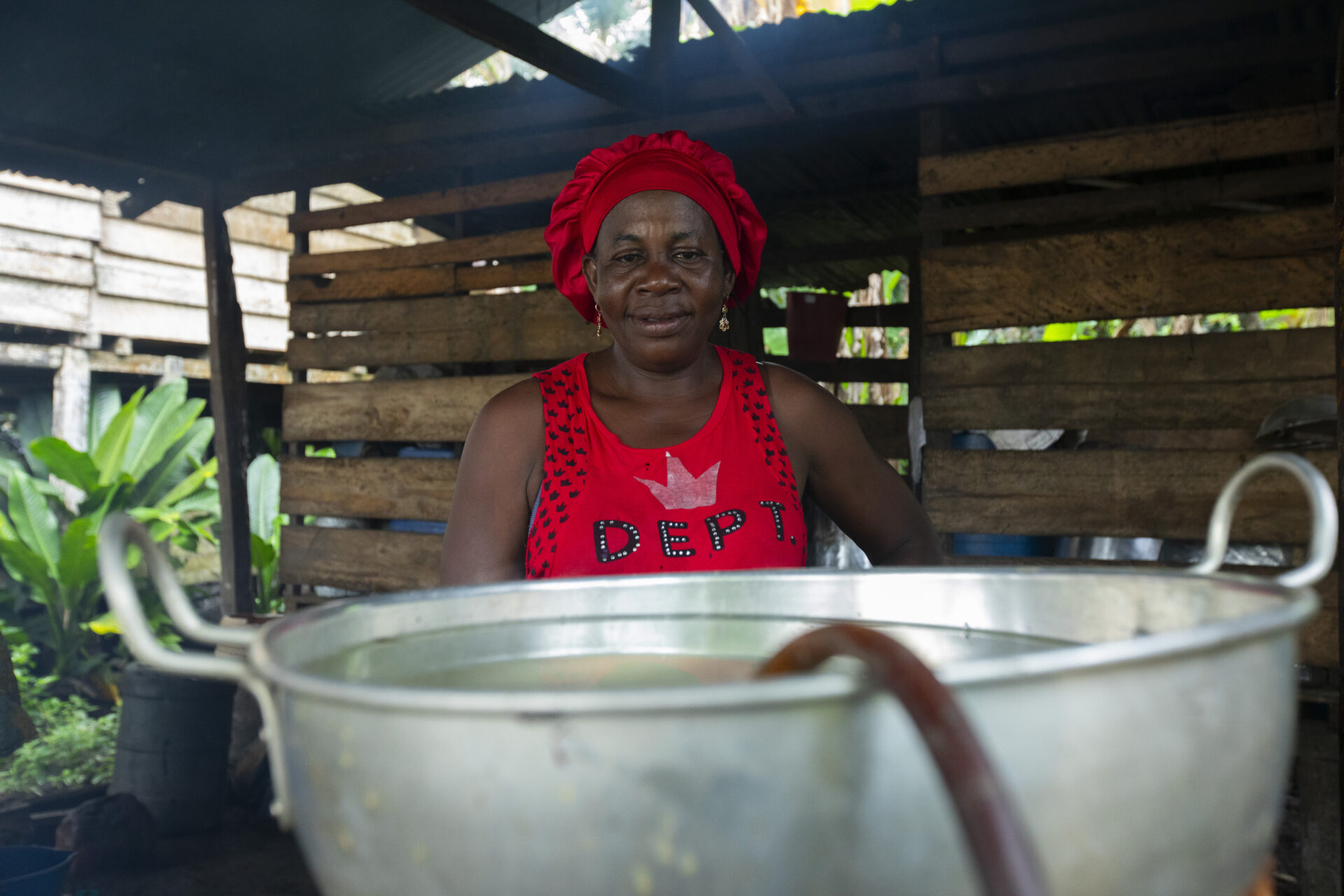
Cultural Revitalization through Viche
The project supports the revitalization and recognition of traditional practices, including the ancestral production of Viche—a cultural symbol of identity and resilience. This tradition has been preserved and formalized through project spaces, reinforcing the community’s connection to its heritage while promoting economic alternatives that are rooted in cultural values.
-
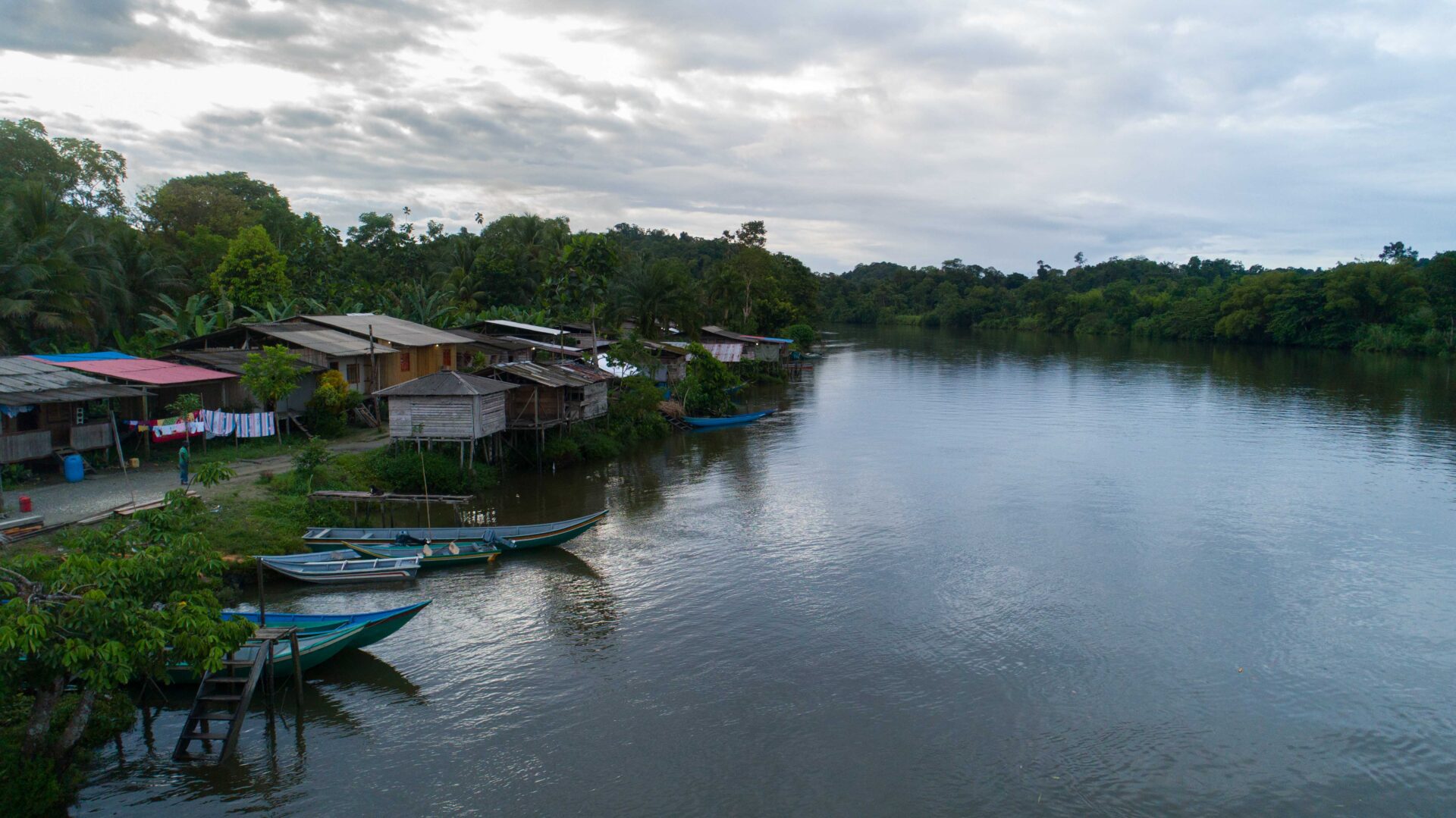
Strategic Infrastructure Development
Cajambre now benefits from two key physical spaces that reflect institutional growth: an administrative office in Buenaventura and the headquarters of the Consejo Comunitario located in Silva, within the territory. These spaces serve as platforms for coordination, planning, and implementation, supporting daily operations and providing visibility and legitimacy to community-led governance.
-
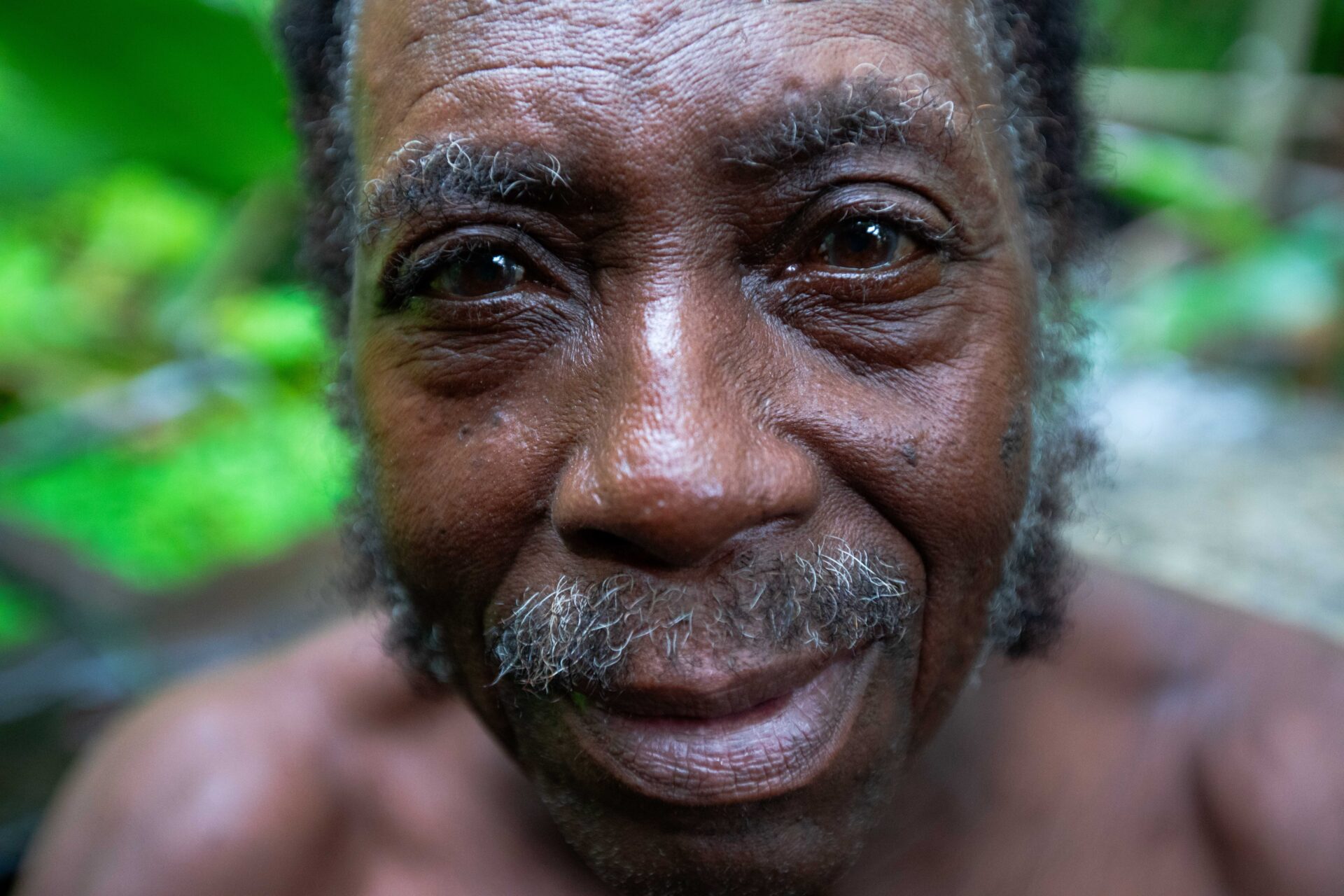
Wisdom and Guidance from Community Elders
A distinctive strength of the Cajambre REDD+ project lies in the active participation and recognition of community elders (ODINSA), whose wisdom and historical knowledge shape governance, cultural preservation, and collective identity. Their guidance has been central to maintaining internal order, honoring traditions like Viche production, and reinforcing the principles of respect, discipline, and shared responsibility. Elders such as Alfonso and Noemí have played key roles in supporting administrative processes, ensuring accountability, and mentoring younger leaders. Their involvement ensures that the project stays grounded in local values while adapting to new technical and environmental challenges.
-
Adaptability in Challenging Contexts
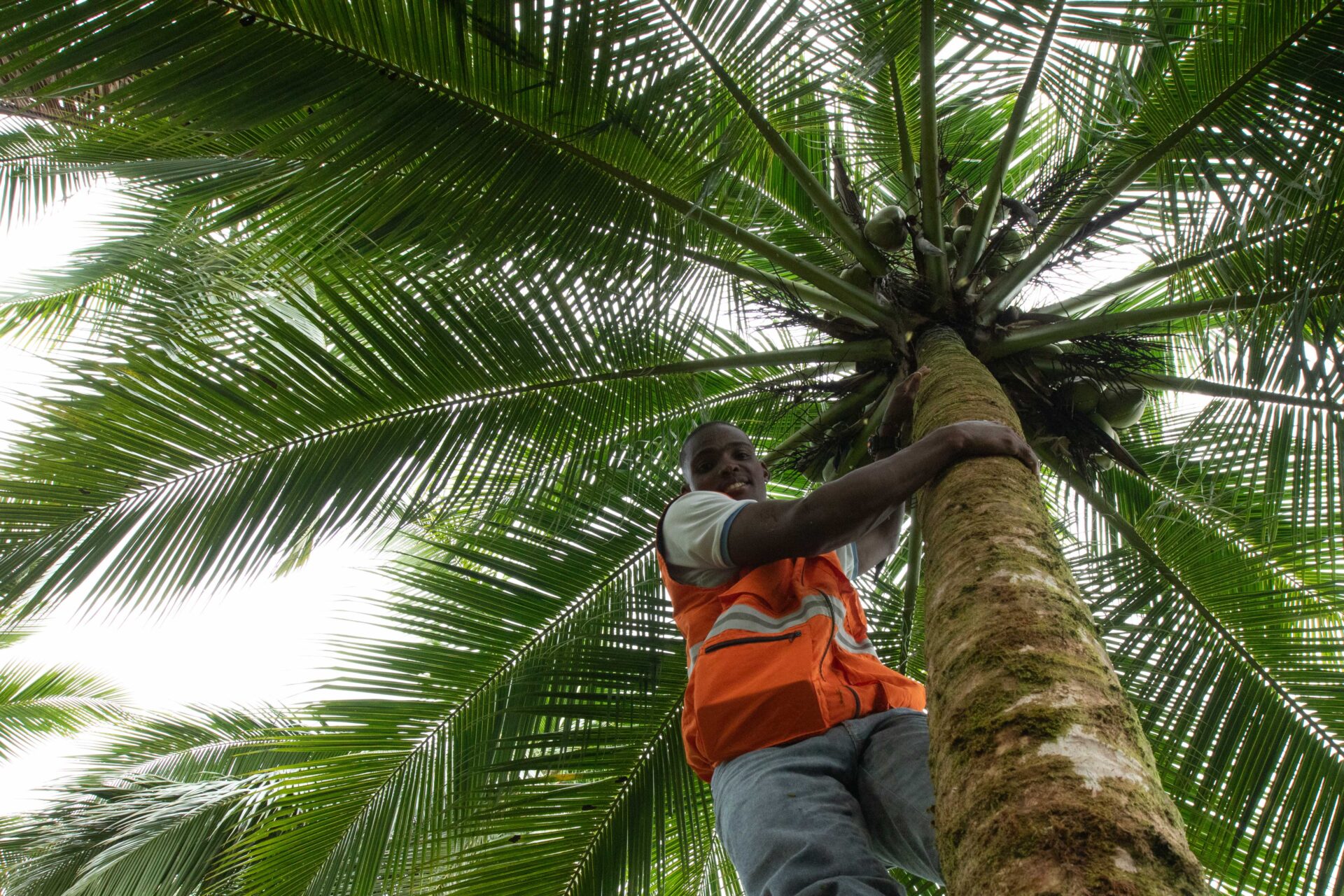
Despite ongoing security concerns and environmental pressures, the project has maintained progress through strong local coordination and adaptive planning. Efforts like shifting activities to urban centers when necessary, maintaining social investment tracking, and strengthening monitoring of productive components (e.g., coco, chontaduro, sugarcane) demonstrate flexibility and commitment in sustaining project impact.
-

Institutional and Scientific Collaboration
The Cajambre REDD+ project has cultivated strong institutional and scientific partnerships to reinforce its conservation and development goals. Collaborations with entities like the CVC (Corporación Autónoma Regional del Valle del Cauca) have supported biodiversity efforts, such as mangrove restoration and marine species monitoring in Punta Bonita. Work with WCS (Wildlife Conservation Society) is advancing the declaration of a local conservation area, while partnerships with the National Land Agency and IDEAM focus on territorial formalization and community-based environmental monitoring. These alliances fill critical gaps in state presence, enhance technical rigor, and provide co-financing that strengthens the long-term sustainability of the project.