Context
Enabling environment
Everland country assessment
Colombia offers a strong enabling environment for REDD+, backed by national policies, participation in international mechanisms (e.g., FCPF, Vision Amazonía), and clear alignment with its NDCs. REDD+ is formally integrated into Colombia’s climate strategy, and key government institutions like the Ministry of Environment and Sustainable Development (MinAmbiente) and IDEAM (Institute of Hydrology, Meteorology and Environmental Studies) have supported jurisdictional approaches and community-based projects. The Cajambre REDD+ project demonstrates how carbon finance provides additionality by addressing chronic underinvestment in Afro-descendant territories. REDD+ revenue supports national goals on conservation, land tenure, and rural development. While agencies such as IDEAM and regional environmental authorities have shown openness to collaboration, adaptive support varies due to bureaucratic complexity and shifting political priorities. Nevertheless, community-driven models like Cajambre remain well-positioned to deliver verified climate and social benefits if complemented by consistent technical and legal support from government actors. REDD+ in Colombia thus holds scalable potential to bridge national policy and grassroots implementation.
Country-level REDD+ framework and scalabillity
Colombia implements REDD+ through its National REDD+ Strategy (ENREDD+), coordinated by MinAmbiente with IDEAM. Governance is anchored in RENARE, the national mitigation registry, which ensures transparency, traceability, and prevents double counting of credits. RENARE also applies the Maximum Mitigation Potential (MMP) methodology, setting an upper bound for project-level emission reductions consistent with national reference levels.
Jurisdictional and Nested Approach
Colombia has adopted a nested architecture, integrating project and subnational initiatives with national accounting. This strengthens consistency in reporting and facilitates alignment with international standards under the UNFCCC. The country first submitted a National Reference Emission Level (NREF) covering deforestation only, later expanding to a FREL that also includes degradation.
Carbon Market and Safeguards
The national carbon tax (Law 1819/2016) allows companies to offset liabilities with certified REDD+ credits registered in RENARE, creating a link between compliance and voluntary markets. Governance is reinforced by Constitutional Court ruling T-248/2024, which highlighted gaps in ownership, state oversight, and safeguards, reaffirming the requirement for Free, Prior and Informed Consent (FPIC).
International Collaborations
Colombia partners with the Forest Carbon Partnership Facility, the REDD Early Movers (REM/Visión Amazonía) program, and bilateral donors (e.g., Norway, Germany, UK), securing results-based finance and strengthening its jurisdictional REDD+ framework.
Political context
The Cajambre REDD+ project operates under Colombia’s supportive legal framework for REDD+, including its commitments under the Paris Agreement and national policies like Law 70 of 1993, which grants Afro-descendant communities collective land and natural resource rights. While institutions like MinAmbiente and IDEAM promote REDD+ through programs such as Vision Amazonía, governance remains fragile in practice. Insecurity poses a serious constraint: areas of the project are affected by armed groups, displacement, and landmines, limiting mobility and oversight. Although the Consejo Comunitario legally leads the project, enforcement is weak and state presence is minimal. NGOs can operate, but their effectiveness often depends on informal agreements in contested areas. Despite strong community governance and REDD+ policy alignment, the success of the project is challenged by Colombia’s wider political instability and lack of reliable enforcement, requiring adaptive strategies and high local capacity to ensure continuity and safety in project execution.
Geographic location
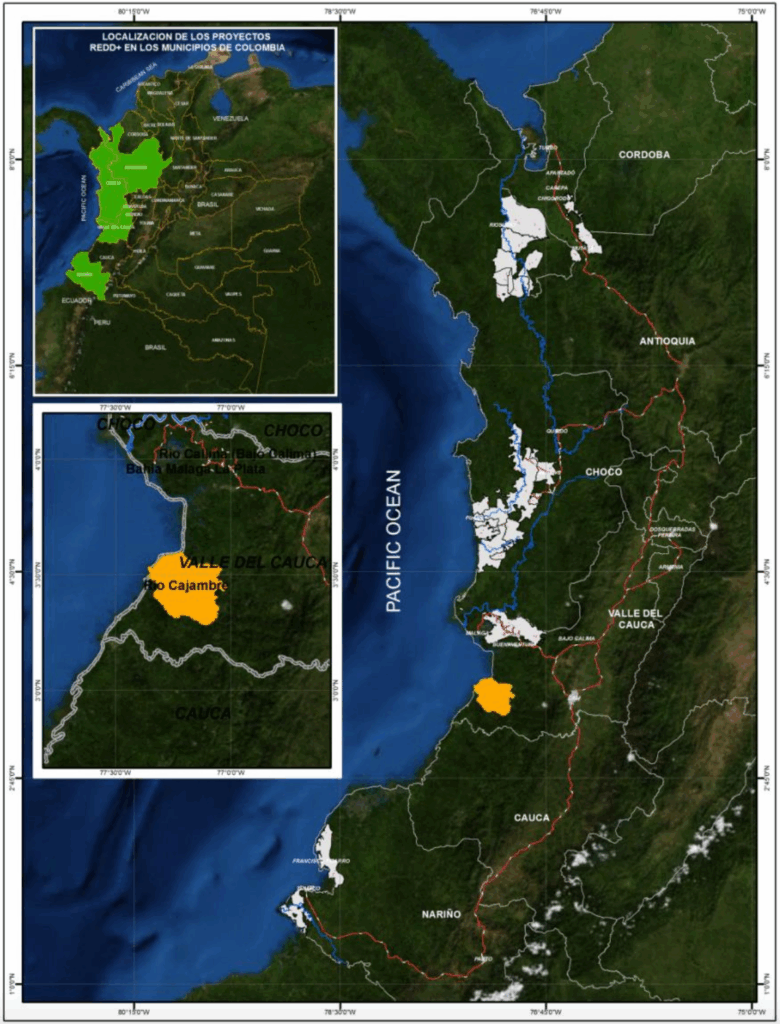
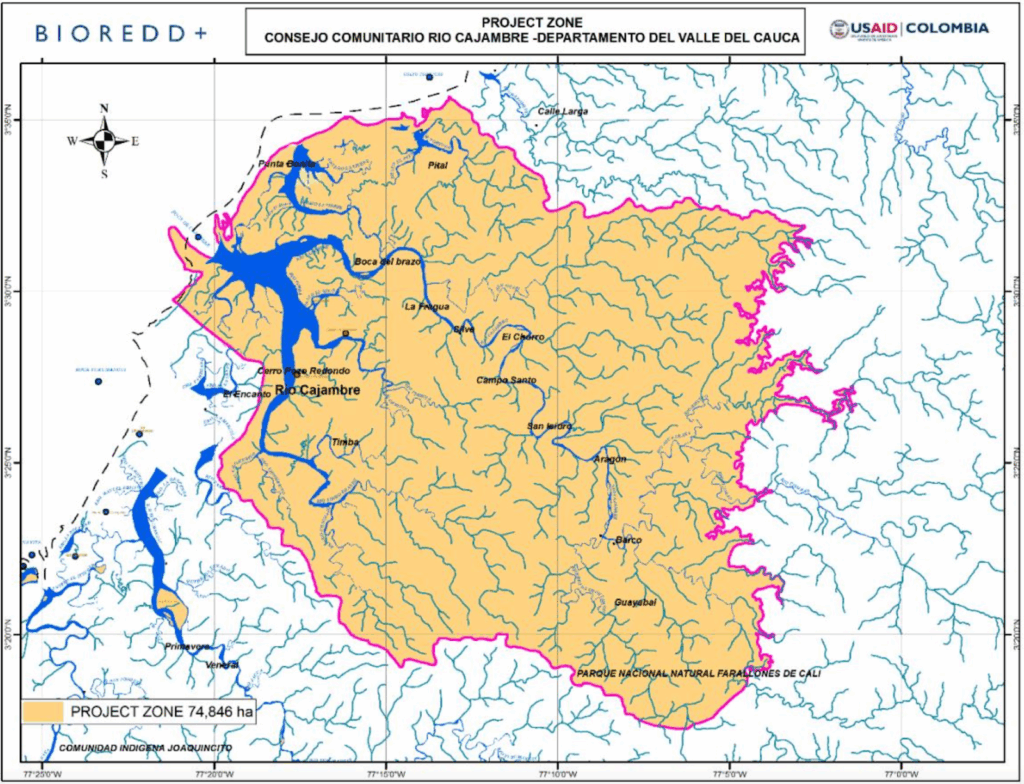
The Cajambre REDD+ Project is located in Colombia’s Valle del Cauca department, within the municipality of Buenaventura on the Pacific coast. It lies near the Farallones de Cali National Park and forms part of the Chocó Biogeographic Region—one of the most biodiverse ecosystems globally. The landscape is predominantly lowland tropical rainforest with dense river networks, high rainfall, and rich biodiversity. The project area is accessible from Buenaventura, the nearest major city and port. The territory is collectively owned by Afro-Colombian communities and managed under community governance structures recognized by national law.
Climate, Ecological context and forest type
The Cajambre REDD+ Project is situated in the Chocó Biogeographic Region, one of the world’s most biodiverse and rain-intensive areas. The climate is humid tropical, with average annual rainfall exceeding 7,000 mm and temperatures typically ranging from 24°C to 28°C. This constant moisture supports dense tropical rainforest ecosystems characterized by high biomass and carbon storage.
The project area hosts primary and secondary forests dominated by species such as Carapa guianensis (Andiroba – Least Concern, LC), Virola spp. (Virola trees – most species Least Concern, LC), and Guazuma ulmifolia (West Indian elm – Least Concern, LC). These forests provide key ecosystem services including water regulation, erosion control, and habitat connectivity along the Pacific corridor. The region also supports vital aquatic ecosystems linked to the Cajambre River and its tributaries.
Biodiversity is a major strength of the project. The area provides habitat for several endangered or vulnerable species, including the Central American tapir (Tapirus bairdii) – Endangered (EN), jaguarundi (Herpailurus yagouaroundi) – Least Concern (LC), the spectacled bear (Tremarctos ornatus) – Vulnerable (VU), and numerous amphibians and birds endemic to the Chocó. The forest also shelters the brown-headed spider monkey (Ateles fusciceps) – Critically Endangered (CR), a flagship species for conservation in the region.
Ecosystem services provided by the project’s forest areas extend beyond carbon storage. They contribute to local food systems (e.g., non-timber products like açaí and medicinal plants), water security, and the resilience of Afro-Colombian cultural practices linked to land and forest management. The conservation of these ecosystems under REDD+ plays a key role in protecting both biodiversity and the livelihoods of the communities that depend on them.
Land and carbon ownership rights
Everland assessment
The Cajambre REDD+ project is rooted in collective land rights granted under Colombia’s Law 70 of 1993, which recognizes Afro-descendant communities as legal owners of their ancestral territories. The Consejo Comunitario del Río Cajambre holds the land title and serves as the formal project proponent, effectively managing land rights through participatory governance structures.
However, on-the-ground access is not always guaranteed. Due to the presence of illegal armed groups, displacement risks, and landmines in surrounding areas, community members face restrictions in mobility and land use, particularly in high-risk zones. These limitations hinder the full exercise of land rights and complicate land monitoring and enforcement.
Despite this, the project is widely perceived to respect and reinforce legal and customary land tenure. It promotes boundary recognition, strengthens community governance, and supports institutional articulation with entities like the National Land Agency. Stakeholders affirm that the project helps safeguard their rights while advocating for improved land tenure security and equitable participation, even if external legal and security support remains necessary to fully realize these protections.
Description of land rights and carbon ownership rights
The land within the Cajambre REDD+ Project is legally owned by Afro-Colombian communities organized under the Consejo Comunitario del Río Cajambre, which holds collective land titles granted under Colombia’s Law 70 of 1993. This law formally recognizes the territorial rights of Black communities and provides a legal framework for self-governance, land use, and resource management. The Consejo Comunitario is the legal authority over more than 84,000 hectares of forest and serves as the primary beneficiary of the project’s carbon revenues.
Land tenure in the project area is secure and well-documented. The titled lands are registered with the National Land Agency, and the community governance structure is recognized by the Colombian government. There are no competing legal claims to the land, although traditional access and use by neighboring communities is acknowledged and respected. Where relevant, customary use by adjacent groups is considered through dialogue and internal agreements.
The project is implemented in line with community governance protocols and Colombia’s legal provisions for collective territories. It has applied Free, Prior and Informed Consent (FPIC) processes from the outset, and community members have participated in project design, planning, and decision-making. Internal procedures regulate land use, forest activities, and benefit distribution, and are periodically updated through assemblies and community consultations.
Carbon revenues are managed collectively through the Consejo Comunitario and are distributed according to agreed-upon rules that prioritize community development, forest monitoring, governance strengthening, and productive activities. Women and youth have dedicated roles in governance and benefit-sharing mechanisms. The project includes safeguards and grievance mechanisms to ensure transparency, inclusivity, and alignment with land rights and customary norms.
This model reinforces legal tenure, strengthens local governance, and ensures that climate finance directly supports the communities that protect and manage the forest.
Community
Description of communities in the project zone
The Cajambre REDD+ Project is embedded in the territory of Afro-Colombian communities in the Río Cajambre basin, organized under a legally recognized Consejo Comunitario. The population is predominantly rural, with strong cultural ties to the land and natural resources. Community livelihoods depend on small-scale agriculture, fishing, and the extraction of forest products. Access to formal employment and public services is limited, and the region has historically experienced marginalization and weak state presence.
Cultural identity is shaped by ancestral practices and collective governance structures rooted in Law 70, which guides decision-making, land use, and internal organization. The community emphasizes principles of autonomy, environmental stewardship, and buen vivir (living well). However, endemic inequalities persist, particularly in access to education, infrastructure, and economic opportunities. Women and youth have historically been underrepresented in decision-making, although this is gradually changing through targeted inclusion strategies.
Economically, the area faces limited diversification and market access, with high dependency on natural resources. This creates both environmental pressures and opportunities for nature-based solutions. The REDD+ project supports sustainable income alternatives, such as community forestry, açaí value chains, and environmental services.
Ecologically, the territory contains high-value forest and aquatic ecosystems that provide critical services, including water regulation, habitat connectivity, and biodiversity conservation. These ecosystems are threatened by illegal logging, mining, and external land pressures.
Key community goals include strengthening territorial control, improving local livelihoods, protecting forest resources, and reinforcing governance structures. Plans are defined through collective assemblies and Planes de Vida (Life Plans), which articulate long-term visions for development, conservation, and cultural preservation.
Potential risks include external land use pressures, reduced project financing, and governance fatigue. The project addresses these through adaptive management, participatory planning, and investments in organizational capacity to maintain momentum and equity in benefit-sharing.
Community Governance and decision making
The governance of the Cajambre community is anchored in its Reglamento Interno de Gobernabilidad, which defines a participatory, culturally grounded decision-making structure. At the core is the Asamblea General (General Assembly), the highest authority composed of community members representing all villages (veredas) in the territory. This body makes key decisions through open consultation and collective consensus, including land management, project participation, and internal regulations.
Supporting this structure is the Junta Directiva (Board of Directors), made up of elected community members – including a President and Legal Representative – who oversee the execution of decisions and administrative responsibilities. The Asambleas Veredales allow for local-level dialogue and ensure that decisions reflect the perspectives of all sub-regions within Cajambre.
Specialized roles such as the Consejo de Mayores (Council of Elders) provide cultural guidance and mediate internal conflicts. Operational committees address areas like production, security, justice, and planning. Elections are held every four years, and positions are filled through community consensus, reinforcing transparency and accountability.
This governance system reflects Afro-descendant traditions and emphasizes autonomy, solidarity, and territorial rights. It has proven effective in managing REDD+ activities, coordinating external partnerships, and ensuring that decisions are community-led, culturally relevant, and equitable
Community capacity for financial decision making
The Cajambre community has made notable progress in strengthening its financial governance capacities. Through the development and execution of their own Planes Operativos Anuales (POAs), the community now leads key processes in budgeting, prioritizing activities, and monitoring expenditures. These plans are prepared by the technical team, reviewed by the executive committee, and approved in the General Assembly, ensuring a participatory and transparent approach to financial planning.
Despite this progress, the community still requires ongoing support from Fondo Acción – the project’s escrow agent – particularly in managing the Fiducia (trust) account, which oversees the disbursement of REDD+ funds. While internal roles such as accountants and administrative assistants have been filled, oversight of fiduciary operations and legal compliance remains a critical area where external guidance is essential.
The project includes capacity-building efforts in administration and finance, including training in contracting, book-keeping, and financial reporting. These efforts have improved discipline and accountability in financial processes, but there is a recognized need for deeper institutionalization of financial procedures and risk management tools. Continued support from partners like Fondo Acción and exposure to external training opportunities are key to helping the community achieve greater autonomy and resilience in financial governance.
Endangered wildlife
-

Brown-headed Spider Monkey
Ateles fusciceps rufiventris
A Colombian endemic primate, highly threatened by habitat loss, hunting, and low population density. It plays a vital role in seed dispersal and requires large, continuous forests to survive. Its presence indicates healthy ecosystems, making it a conservation priority for the region.
Critically Endangered (CR)
-
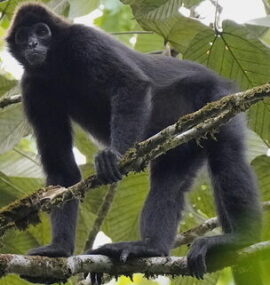
Black-headed Spider Monkey
Ateles fusciceps
Among the most threatened primates in Latin America. It is extremely vulnerable to habitat fragmentation due to its wide-ranging behavior. As a key seed disperser, it contributes to forest regeneration and is a priority species for monitoring within the Cajambre REDD+ Project.
Critical Endangered (CR)
-

Baird’s Tapir
Tapirus bairdii
The largest terrestrial mammal in Central and northern South America. A key seed disperser and ecosystem engineer. Threatened by deforestation, habitat fragmentation, and poaching, its conservation is critical for maintaining forest structure and ecological processes.
Endangered (EN)
-
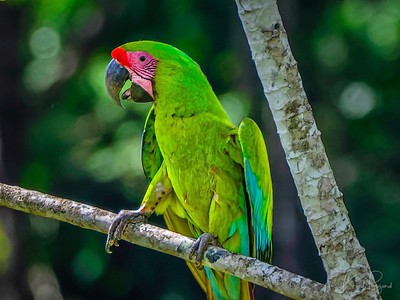
Great Green Macaw
Ara ambiguus
A large, forest-dependent parrot that requires mature trees for nesting and feeding. Threatened by habitat loss, forest fragmentation, and capture for the illegal pet trade. It serves as an important flagship species for conservation in tropical lowland forests.
Endangered (EN)
-
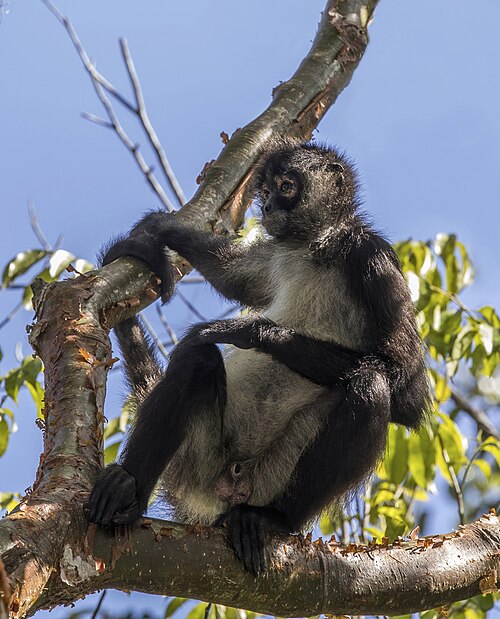
Geoffroy’s Spider Monkey
Ateles geoffroyi
A highly agile primate and essential seed disperser. Its population is declining due to deforestation and hunting pressure. It depends on large tracts of continuous forest and plays a vital role in maintaining forest composition.
Endangered (EN)
-
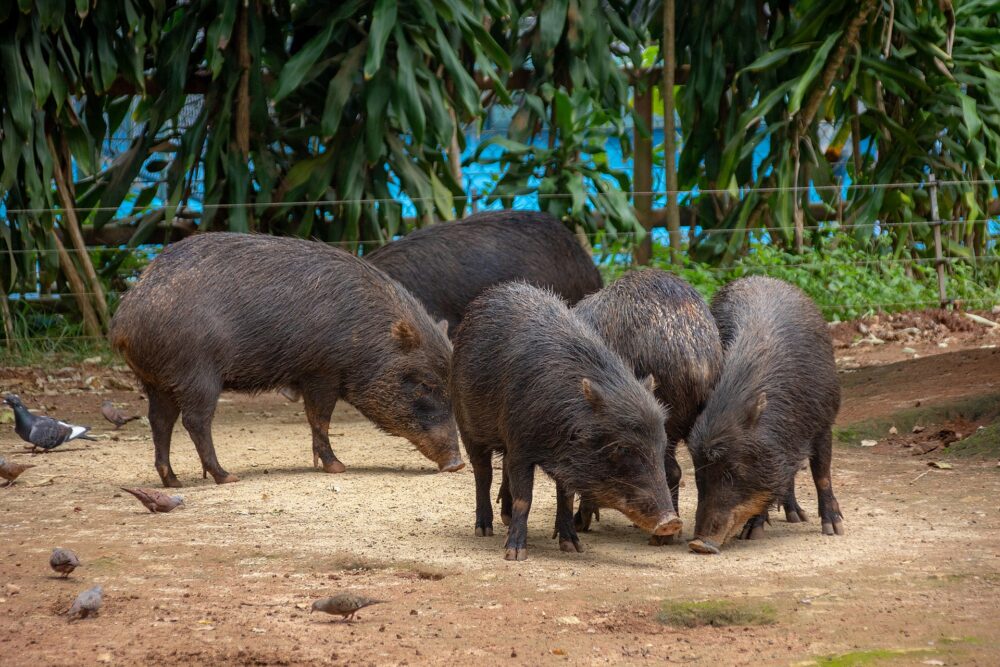
White-lipped Peccary
Tayassu pecari
A highly social mammal that moves in large herds and plays a key role in forest dynamics. It is sensitive to hunting and deforestation, and serves as an ecological indicator of forest health. Declining populations across its range highlight the importance of intact forest habitats like those conserved in Cajambre.
Vulnerable (VU)